A silk saree draped for a morning office presentation, a grandmother’s temple necklace worn over a modern gown, a handloom kurta paired with tailored trousers for dinner with friends: traditional Indian clothing was never meant to sit in a wardrobe waiting for one festival a year. The real skill is styling traditional Indian outfits so they feel natural in modern life, honouring the craft and the memories woven into each piece while still looking like you, today. This guide shares practical ways to wear sarees, lehengas, kurtas and heirloom jewellery for weddings, work, festive gatherings and everyday occasions, without feeling overdressed, outdated or uncomfortable.
Start With One Traditional Hero Piece
The easiest way to wear tradition in a modern setting is to let one piece lead and keep everything else simple. A rich Banarasi saree does not need heavy jewellery, an embroidered jacket and ornate shoes all at once; it needs a clean blouse, one beautiful accessory and room to shine. The same rule applies in reverse: if your statement piece is a bold antique necklace, build the outfit around it with a plain silk kurta or a solid-coloured saree.
This one-hero approach is what makes traditional dressing work for occasions that are not fully traditional. A handloom cotton saree with a structured blazer reads confident and professional. A simple chikankari kurta with modern trousers and loafers suits a gallery visit or a relaxed dinner. When you choose the hero piece first, every other decision, colour, jewellery, footwear and bag, becomes easier, and the final look feels intentional rather than assembled at random from everything festive you own.
Mix Traditional and Contemporary Pieces Thoughtfully
Some of the most admired modern Indian looks come from mixing, but mixing works best when the pieces share something: a colour family, a level of formality, or a texture story. Pair a traditional embroidered or mirror-work jacket with a plain slip dress or well-cut trousers. Wear a crisp white shirt with a silk saree for a look that is both classic and current. Drape a dupatta as a light wrap over a plain evening outfit instead of reserving it for a full salwar suit.
Fit is what makes these combinations look designed rather than improvised. A traditional piece worn a size too loose or paired with a sloppy silhouette will drag the whole outfit down, while a well-fitted blouse or a properly tailored kurta instantly modernises even a decades-old garment. If you inherit or buy vintage pieces, a good tailor is your best investment. Small changes, adjusting a blouse, shortening a kurta, replacing worn lining, can turn a stored-away outfit into one you reach for constantly.
Let Jewellery Carry the Story
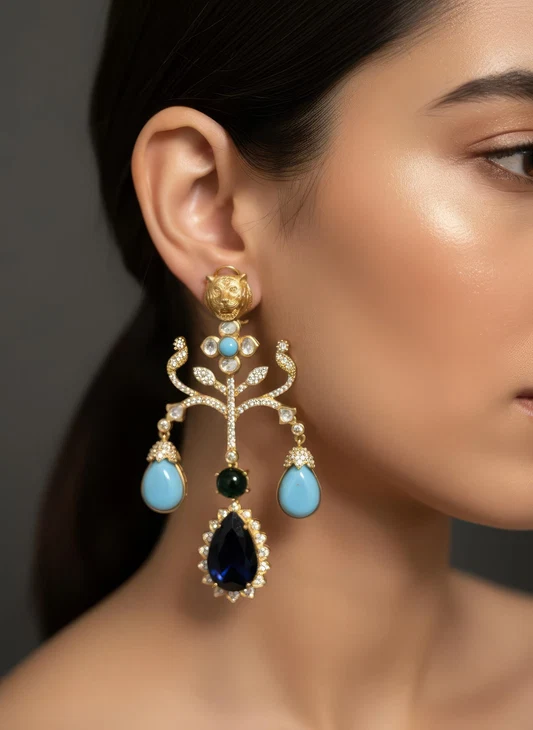
Jewellery is often where tradition lives most personally, and modern styling has made it wonderfully versatile. Statement earrings can lift the simplest outfit: a plain saree, a monochrome kurta set, even a tailored dress for an evening event. As this guide to modern Indian earrings and statement style shows, one strong pair of jhumkas, chandbalis or contemporary temple-inspired earrings can replace an entire heavy set and still make the look unmistakably Indian.
Heirloom pieces deserve the same freedom. A family necklace, bangles or a brooch carry meaning no new purchase can match, and they look freshest when they are not forced into a full period costume. Wear your grandmother’s gold bangles with a modern watch. Pin an heirloom brooch on a plain jacket or a clutch bag. If a piece is too fragile or too ornate to wear as it is, skilled jewellers can adapt it with respect for the original craft, an idea explored beautifully in this piece on transforming family heirlooms into contemporary pieces. The goal is not to change what the piece means, but to give it a life outside the locker.
Choose Drapes, Fabrics and Colours for the Occasion
Context decides how far to go. For a wedding, richness is welcome: silk, zari, deeper colours and layered jewellery all belong. For work, choose lighter handlooms, smaller motifs and one traditional accent, such as a woven dupatta, a block-printed jacket or silver jewellery, so the outfit stays practical through a full day. For festive gatherings at home, comfort leads: breathable cottons and soft silks, easy drapes and jewellery you can cook, host and celebrate in.
Saree draping itself offers modern options. The classic drape is timeless, but a belted drape over a fitted blouse, a pre-stitched saree for a long evening, or a saree worn with a cropped jacket can change the mood completely. Colour works the same way. Traditional does not have to mean only red, maroon and gold. Ivory with antique gold jewellery, indigo handloom with silver, or a jewel-toned silk with minimal accessories all honour tradition while feeling current. Let the fabric’s own character guide you: crisp cottons look best in clean, structured styling, while fluid silks reward softer drapes and movement.
Balance Hair, Makeup and Footwear
A modern traditional look is decided as much by the finishing touches as by the garment. If the outfit and jewellery are rich, keep hair and makeup calm: a neat bun or soft waves, defined eyes or a strong lip, but not everything at full intensity. If the outfit is simple, a bolder lip or a traditional bindi can supply the festive note on its own.
Footwear deserves honest attention because it changes both comfort and silhouette. Juttis and embroidered flats remain beautiful with lehengas, sarees and kurta sets, and they are kind to your feet through long celebrations. For mixed or contemporary outfits, clean block heels, kolhapuris or even minimalist sandals can bridge the traditional and modern elements. Match the bag to the occasion rather than the outfit’s embroidery: a small potli for a wedding, a structured handbag for work, a simple clutch for dinner. When each element has a clear job, the whole look feels composed instead of crowded.
Care for Your Pieces So You Can Wear Them More
Traditional clothing gets worn more often when it is easy to reach for and properly cared for. Store silk sarees wrapped in soft cotton or muslin, away from direct light, and refold them along different lines every few months so the creases do not weaken the fabric. Keep zari and embroidered pieces away from perfume sprays, hang heavy lehengas only for short periods, and air garments after wearing before putting them away.
Build a small rotation of versatile blouses in neutral and jewel tones that work across several sarees, and keep one or two adaptable dupattas and jackets ready; these connectors are what turn individual garments into many outfits. Most importantly, wear your traditional pieces. A saree worn to a book launch, a kurta worn to lunch, heirloom earrings worn on an ordinary good day: this is how tradition stays alive, not as a costume for rare occasions, but as a living, personal style that grows with you.