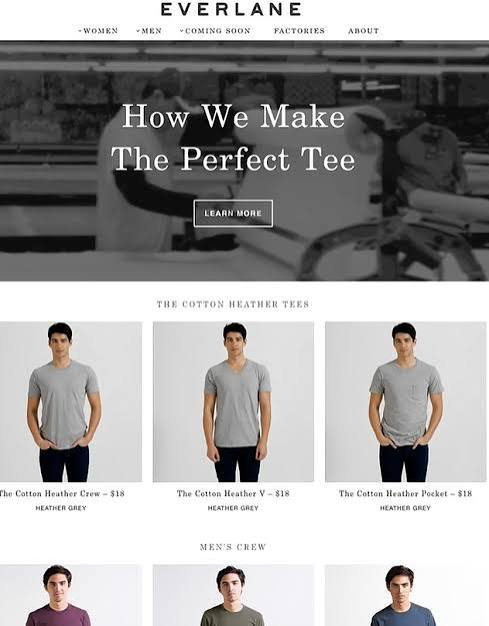

A T-shirt might be the easiest piece of clothing to draw. Two sleeves. A neck. A body.
There are no complicated collars, no buttons, no lining and usually nowhere near the number of pattern pieces you’d find in a jacket or pair of trousers. You would assume this makes a T-shirt one of the easiest garments to get right.
It almost does the opposite.
Take five plain white T-shirts into a fitting room in the same size and you’ll probably like one considerably more than the others. One neck feels too wide. Another sleeve sticks out. One looks good from the front but strangely long from the side. Another feels perfect until it has been washed twice. Nothing is obviously wrong with them. But only one feels right. That is the problem with making basics. There is nowhere to hide.
The Fabric Has Already Made Half the Decision
Before a pattern is cut, the fabric has decided quite a lot about how a T-shirt will behave.
A lightweight jersey tends to fall closer to the body. A heavier fabric has more structure and can hold a boxier silhouette. Add elastane and the recovery changes. Change the yarn, knit construction or finishing and two fabrics with similar compositions can still feel completely different.
This is why GSM gets discussed so often with T-shirts.
GSM simply measures fabric weight in grams per square metre. It is useful, but it isn’t a quality score.
A 240 GSM T-shirt isn’t automatically better than a 180 GSM one. The heavier shirt may have more structure, but the lighter one may make far more sense in hot weather. Yarn quality, knitting, finishing, shrinkage and construction still matter.
The right question isn’t really, “What GSM is best?” It’s, “What is this T-shirt supposed to do?”
Fit Is Mostly a Collection of Small Decisions
People tend to describe T-shirt fit using three words: slim, regular and oversized. The pattern room has considerably more to think about.
Move the shoulder seam out slightly and the whole shirt starts looking more relaxed. Add width to the chest without adjusting the shoulder and it can simply look too large. Change the sleeve opening and suddenly the arm looks completely different. Add an inch to the body length and a good proportion can disappear.
Even the position of the armhole changes how the shirt moves None of these adjustments sounds particularly exciting. Half an inch here. A little less there.
But that is essentially what fit development is: repeatedly making tiny decisions until the garment stops looking like a pattern and starts looking natural on a person.
It’s also why copying measurements from another T-shirt doesn’t necessarily reproduce its fit. Fabric behaves differently, bodies are different and measurements interact with each other. A good pattern is a system, not a list of numbers.
The Neckline Gives Bad T-Shirts Away
You can often tell how well a T-shirt has been made by looking at the neck.The rib needs enough recovery to return to shape after being pulled over your head. Too loose and the neckline begins to wave or stretch. Too tight and the shirt becomes uncomfortable.
Then there is the shape itself. A crewneck that sits slightly higher can make a T-shirt feel structured and contemporary. Drop it lower and the same shirt immediately becomes more casual. Make the rib too wide and it dominates the garment. Make it too narrow and it can disappear.
These are millimetres doing quite a lot of work. And unlike a printed shirt, there is no artwork distracting you from them.
The First Sample Is Rarely the T-Shirt
This is the part customers rarely see. A basic tee can look finished long before it actually is.
The first sample might have the right chest but the wrong length. Fix the length and the sleeve suddenly feels short in proportion. Change the shoulder and the armhole needs attention. Then the fabric is washed and the measurements move again.
Brands that take basics seriously end up spending a surprising amount of time refining products that look very simple from the outside.
That philosophy is visible in how Pakistani clothing brand Attir approaches its everyday products. Instead of treating the T-shirt simply as an inexpensive base for seasonal graphics, its T-shirt range plays with fabric, proportion, texture and different fits while keeping the garment itself relatively uncomplicated.
It is not about making the T-shirt look complicated. It is about getting more out of a simple shape.
Then You Wash It
A fitting-room mirror tells you what a T-shirt looks like today. The washing machine tells you whether it was actually good.
Cotton can shrink. Poorly controlled fabric can twist. Neck ribs can lose recovery. Side seams can begin moving towards the front or back. A shirt that initially had the perfect length can become noticeably shorter.
This is why fabric testing and shrinkage allowance matter during development. A manufacturer can anticipate some movement and adjust the pattern accordingly, but only if the fabric has actually been tested.
For the customer, the lesson is simpler: don’t judge a basic only by how soft it feels on the hanger. Softness sells the first wear. Recovery, construction and stability sell the twentieth.
Expensive Doesn’t Automatically Mean Better Either
A higher price can pay for better cotton, stronger yarn, better finishing, more careful sewing or more development. It can also pay for branding. That makes T-shirts particularly difficult to judge from price alone. Instead, look at the things the garment can’t easily fake. Does the neckline sit flat? Do the seams look clean? Does the fabric recover when stretched? Does the shoulder actually sit where the intended fit suggests it should? Does the brand tell you what the fabric is?
And, most importantly, does it still look right after you’ve worn it for a while? The best basic is rarely the one that impresses you most on a hanger. It’s the one you stop thinking about once you’re wearing it.
Simple Is Not the Same as Easy
Fashion naturally gives more attention to complicated clothes. A jacket with twelve pattern pieces feels like design. A plain cotton T-shirt doesn’t.
But simplicity can be unforgiving.
When you remove prints, embellishment, unusual construction and obvious design features, what remains is fabric, proportion and execution. Every small decision becomes easier to see. Perhaps that is why genuinely good basics are surprisingly difficult to replace.
You don’t necessarily remember why your favourite T-shirt became your favourite. You just notice when it’s in the wash.
And then you reach for it again as soon as it’s back.