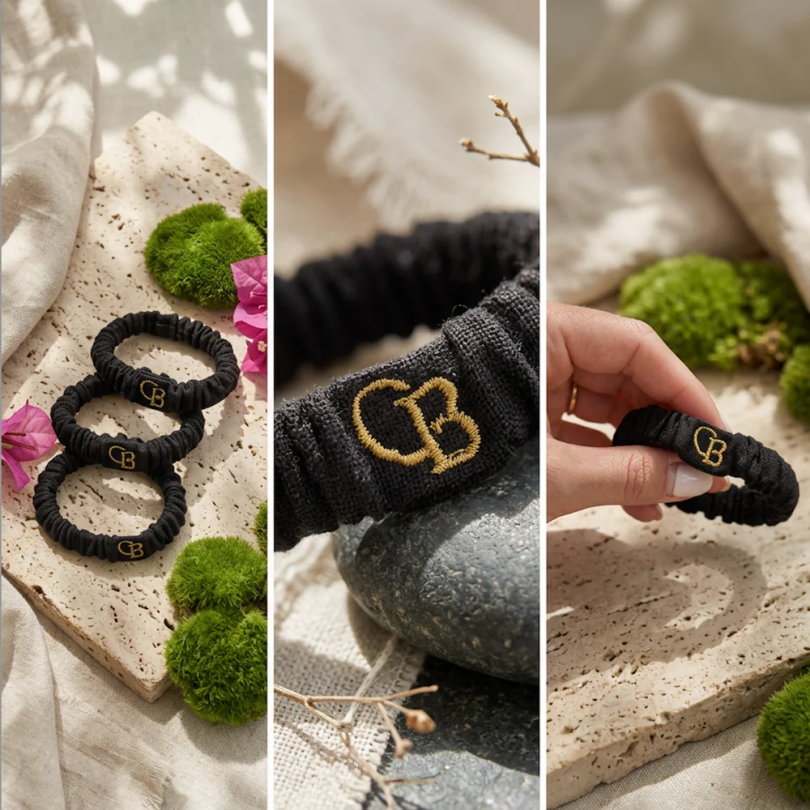

Most people grab whatever sits near the register and never think twice when shopping for hair ties. Yet the gap between hair ties shows up fast, in weakened strands and a pile of snapped bands in the drawer. One kind guards your hair all day. Another wears it down each time you pull it back.
The fix starts with what a band is made of, not color. The best hair ties use gentle fabric and a soft core, not coated plastic or metal crimps. Plant-based options like the Hair Halo™ show how upcycled pineapple fiber blend fabric holds firmly without the snags older bands leave.
Why Materials Matter More Than Looks
Damage Hides Where Bands Pull Tight: A band does its work on the inside, where the fabric meets your strands again and again. In salon work, stylists routinely see breakage along the ponytail line where stiff plastic bands grip the same spot. Softer fabric over a natural core spreads that load, so the hold feels lighter.
Plant Fiber Behaves Unlike Plastic Thread: Many bands marketed as eco-friendly still use recycled polyester, which is plastic spun into thread. Plant-based fabric holds its shape without shedding tiny synthetic particles that worn polyester can release. Dermatology notes on traction alopecia tie repeated pulling to gradual thinning, so a softer grip protects more than styling time.
Stretch And Grip Make Or Break Comfort
Real Stretch Returns Without Giving Out: A good band opens wide for thick hair, then returns to the original size without sagging or pinching. That comes from a natural rubber and cotton core instead of thin synthetic elastic. A core with real tensile strength keeps its grip through months of daily use, long after a cheap band snaps.
Comfort You Notice When It Vanishes: Snagging and tugging fade when the surface touching your hair stays soft and even. Coarse elastic and plastic coating drag against the outer layer with every single twist. Smooth pineapple fiber blend fabric glides over the hair cuticle instead of scraping it, so the hold feels secure the whole day.
Plant Fiber Versus Plastic And Polyester
Recycled Polyester Is Still Plastic: Bands labeled recycled often start as plastic bottles melted into polyester thread, so the plastic problem moves rather than disappears. Each wash and stretch can shed microplastics that drift into waterways. Plant-based fabric skips that cycle, drawing on upcycled pineapple fiber that would otherwise be left behind after the harvest.
No Single Band Suits Every Head: The better question is which band suits your hair, since different hair types each need slightly different handling. A soft fabric band adapts to most of them, while coated plastic slips on fine strands and dents thicker ponytails. Healthy hair elasticity holds up best under steady tension, not sharp pulling.
What A Gentle Hold Saves Long Term
Small Daily Pulls Add Up Fast: Each pull from a stiff plastic band lands as a small load on the same stretch of hair. Left unchanged, that repeated mechanical stress shows up as split ends and breakage along the hairline. The longer the habit runs, the more damage builds before the pattern becomes obvious in the mirror.
Durability That Pays For Itself: A band made to last up to a year with proper care replaces the stream of cheap ties that snap within weeks. That means less money spent and less plastic in the trash. With Ciao Bella, 5% of proceeds also supports environmental causes, so the upside reaches past your own drawer.
Features Worth Checking Before You Buy
A Quick Checklist Before You Buy: Smart shopping for hair ties comes down to a few details that separate a band that protects your hair from one that quietly wears it down. Read the full material list first, then check the core and the finish. The points below cover what tends to matter most under daily wear.
- Confirm the fabric is a true plant-based material, not recycled polyester relabeled as eco-friendly.
- Look for a natural rubber and cotton core instead of synthetic elastic that stiffens and snaps.
- Pick a smooth, wide surface that holds without pressing the creases thin coated elastics leave.
- Favor a band backed by a replacement promise, a sign it is built to last.
Questions Shoppers Ask Before Switching
Do fabric hair ties hold as well as tight elastics?
Fabric bands hold securely when a soft outer layer pairs with a firm natural core. They grip through gentle friction, not sheer tightness, so the ponytail stays put without a pinch. Many people find a well-made fabric band holds a workout as steadily as a stiff elastic.
Will a gentler band reduce breakage?
A gentler band lowers the repeated tension that drives much of the breakage near the hairline and ends. It cannot reverse damage already done, yet it stops adding to it with every ponytail. Over a few weeks, many people notice fewer snapped strands where a tight elastic once sat.
How long do plant-based hair ties last?
With proper care, a quality plant-based band can last up to a year of regular wear. Gentle washing and air drying help the natural core keep its stretch over time. Cheap plastic ties often give out within weeks, which is part of why they pile up in the trash.
The Swap Your Hair Will Thank You For
The band you grab each morning is one of the easiest hair choices to get right, and a gentle plant-based one guards your strands while keeping plastic out of the trash. Skipping the swap only adds breakage and waste you do not need. Explore the hair ties and place your pre-order today.