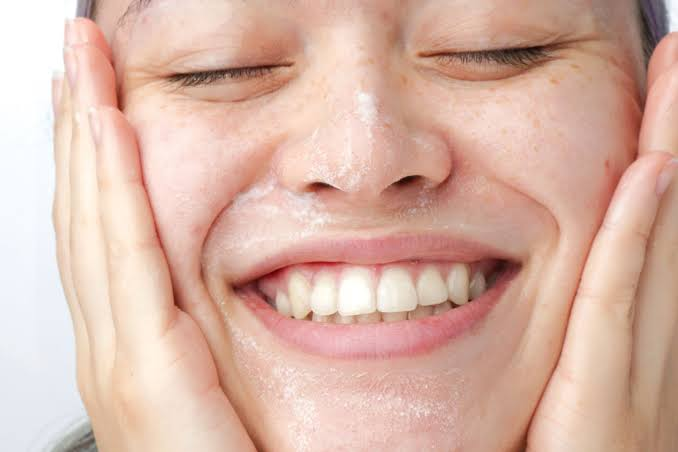

Long before serums and ampoules, rice was the beauty staple in kitchens across Southeast and East Asia. Grandmothers in Java ground it into cooling face powders, royal brides were scrubbed with rice-based pastes before their weddings, and Korean households saved the cloudy water left from rinsing grains to wash their faces.
Today, rice sits in the ingredient lists of some of the best-selling products in K-beauty. That shift raises a fair question: does the modern version live up to the tradition, and does the tradition hold up under a microscope? Below, we look at the history, the research and the most practical ways to bring rice into a routine.
Rice for Skin in Indonesian Beauty Traditions
Indonesia’s best-known rice ritual is bedak dingin, or “cold powder.” Rice is soaked for days, sometimes weeks, ground into a paste, shaped into small pellets and sun-dried. Mixed with a little water, the pellets turn into a cool, chalky mask that people traditionally wore overnight or after time in the sun. Many families blend in local botanicals, and Javanese recipes often include yam bean starch, cinnamon bark and temugiring, a relative of turmeric.
The second classic is lulur, the Javanese body scrub historically prepared for brides in the days before a wedding. Recipes vary by region, but rice flour and turmeric are the common base, used to buff away dull surface skin and leave a warm glow. Both rituals share a logic modern skincare would recognize: gentle exfoliation, soothing and consistent use over time. Our guide to traditional Indonesian skincare secrets covers more of these heritage practices.
What Science Says About Rice for Skin
Tradition is persuasive, but the research is what explains why rice keeps showing up in modern formulas. The evidence is still early, mostly lab-based and small-scale, yet it points in a consistent direction.
Antioxidant and Elastase Activity
The most cited paper is a 2018 study by Marto and colleagues at the University of Lisbon, published in the journal *Cosmetics*. The team found that water left after boiling rice showed antioxidant activity in lab tests comparable to vitamin C, along with notable inhibition of elastase, an enzyme that breaks down the elastin that keeps skin springy. They then built a rice water gel and tested it for 28 days on a panel of 12 volunteers, with a patch-test safety protocol showing it was well tolerated.
Rice Starch and the Skin Barrier
A 2002 study in *Acta Dermato-Venereologica* looked at rice starch added to bath water. On skin deliberately irritated with a harsh cleansing agent, the rice starch bath helped the barrier recover faster than plain water. It is a narrow finding, but it supports rice’s long reputation as a soothing ingredient.
Compounds in Rice Bran
Much of rice’s skincare interest sits in the bran, the outer layer removed during polishing. Rice bran contains ferulic acid, a plant antioxidant widely paired with vitamins C and E in modern serums, and gamma oryzanol. Indonesian researchers testing bedak dingin ingredients have measured gamma oryzanol in rice flour and noted that bran is the richest source.
DIY Rice Water for Skin: Benefits and Limits
Homemade rice water is cheap and easy. Rinse half a cup of rice, soak it in about two cups of clean water for 30 minutes, then strain and use it as a toner or face rinse. Some people ferment it for a day or two at room temperature, which lowers the pH and creates the slightly sour version used in many traditional recipes.
The trade-offs are real, though. Homemade rice water has no preservative, so it can grow bacteria within days even in the fridge; make small batches and discard anything that smells off. Fermented versions can sting sensitive skin, and the concentration of useful compounds changes with every batch, variety and soaking time. Patch test on the jawline first, and keep DIY rice water as a gentle rinse rather than a treatment. Our round-up of beauty hacks using local ingredients has more kitchen-based ideas worth trying alongside it.
Modern Rice Skincare Formulas
Formulators solve the DIY problems by extracting rice at set concentrations, stabilizing it and pairing it with ingredients that do what rice alone cannot. Common forms include rice ferment filtrate, rice bran water, rice bran oil and, more recently, rice-derived PDRN.
Korean brands have leaned into this more than anyone. Dr.Melaxin, a Korean derma brand focused on slow aging, built its Peel Shot line around a rice complex made from rice water extract, black and white rice and rice bran water, paired with AHA and BHA for gentle exfoliation and niacinamide for a more even-looking tone. The ampoules are designed to lift dead skin cells and refine the look of rough texture while hydrating, a modern take on what lulur did with rice flour. Anyone curious about rice extract skincare can see how the line moves from cleanser to ampoule to serum.
Building a Rice for Skin Routine
Rice works best as a supporting player rather than a miracle step. The table below compares the main options.
| Option | What it offers | Best for | Watch-outs |
| DIY rice water toner | Gentle rinse, soothing feel | Curious beginners on a budget | Short shelf life, inconsistent strength |
| Traditional bedak dingin mask | Cooling, oil-absorbing finish | Oily skin, hot climates | Can feel drying, hard to find outside Southeast Asia |
| Rice-based exfoliating ampoule or serum | Standardized rice extract with exfoliating acids | Dullness, rough texture, visible pores | Introduce slowly alongside other acids |
| Rice bran oil or rice cream | Antioxidant-rich moisture | Dry or mature skin | Heavier texture for oily skin |
A simple sequence is to cleanse, apply a rice-based toner or ampoule, follow with a moisturizer and finish with sunscreen in the morning. Anyone already using retinoids or strong acids should add rice-based exfoliants on alternate evenings at first.
Rice for Skin FAQ
Is rice water good for hair as well?
Rice water rinses have a long history in hair care across Asia, and many people like the added softness and slip. Scientific evidence for hair is thinner than for skin, and leaving starchy rice water on too long can make hair feel stiff, so rinse it out after a few minutes.
Can bedak dingin or rice water replace sunscreen?
No. A 2017 Indonesian study found that a Javanese bedak dingin formula did show some sun-protective activity in lab testing, but traditional powders are not standardized or tested to modern SPF rules. Keep a broad-spectrum sunscreen as the last morning step, especially when using exfoliating rice products.