When shopping for a diamond — whether for an engagement ring, a statement necklace, or a pair of elegant drop earrings — one of the most important decisions you will make has nothing to do with the cut or the setting. It has everything to do with the certificate tucked inside the box. Diamond certifications are the backbone of trust in the fine jewelry industry, and two names dominate the conversation: GIA and IGI. Understanding the difference between these two grading laboratories can mean the difference between a confident purchase and a costly mistake.
Why Diamond Certification Matters More Than You Think
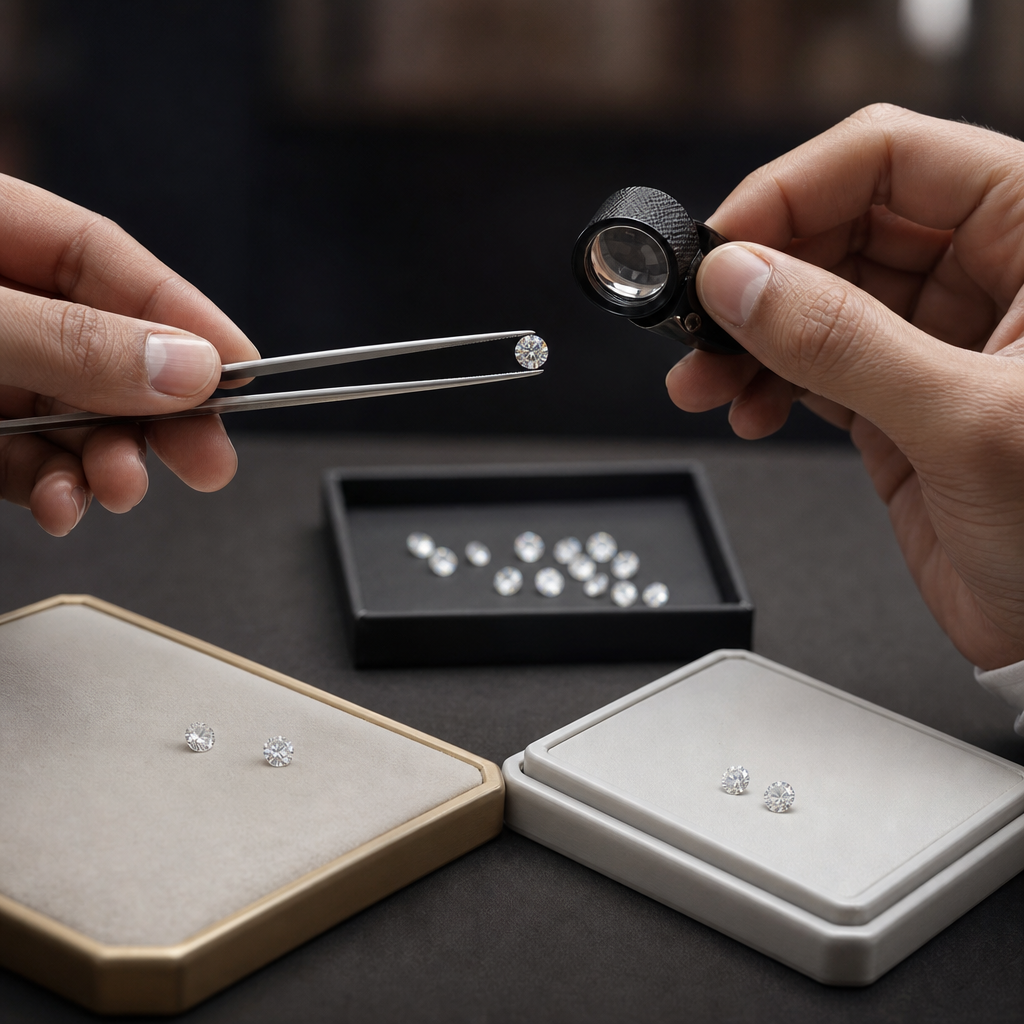
A diamond certificate, also called a grading report, is an independent assessment of a stone’s quality based on the four Cs: cut, color, clarity, and carat weight. Without a certificate from a reputable laboratory, you are essentially taking a jeweler’s word for the quality of a stone that could be worth thousands of dollars. Certification removes subjectivity from the equation and gives buyers a standardized, verifiable document they can rely on. But not all certificates carry the same weight, and that is precisely where the GIA versus IGI debate becomes critical for any informed buyer.
The Role of Grading Standards in Determining Value
Grading standards vary between laboratories, and those differences have real financial consequences. A diamond graded G color and VS1 clarity by one lab may receive a slightly more generous grade from another. Over time, industry professionals have observed that some laboratories tend to grade more liberally than others, which can inflate the perceived quality — and therefore the price — of a stone that might not deserve such a favorable assessment. This is not a minor technicality; it is a factor that directly affects resale value, insurance appraisals, and long-term satisfaction with your purchase.
GIA: The Gold Standard in Diamond Grading
The Gemological Institute of America, commonly known as GIA, was founded in 1931 and is widely regarded as the most rigorous and respected diamond grading laboratory in the world. GIA actually invented the 4Cs grading system and the International Diamond Grading System, which has since become the universal language of diamond quality. When a diamond carries a GIA certificate, buyers and industry professionals alike understand that the grading was conducted with exceptional consistency and scientific precision. GIA is a nonprofit organization, which means it has no financial incentive to inflate grades in order to please sellers or move inventory. This independence is a cornerstone of its credibility.
Consistency and Reputation Across the Industry
One of GIA’s most significant advantages is the consistency of its grading across thousands of stones and multiple grading sessions. Studies have shown that GIA-graded diamonds tend to hold their value better in the secondary market because buyers trust the accuracy of the report. Jewelers who work with GIA-certified stones often command higher prices, and for good reason — the certificate provides a level of assurance that is difficult to replicate. For buyers who plan to insure their jewelry or eventually resell it, a GIA certificate is essentially a financial asset in its own right.
IGI: A Growing Force in Lab-Grown Diamond Certification
The International Gemological Institute, or IGI, was founded in 1975 and has grown into one of the largest independent gem certification and appraisal institutes in the world. While IGI has historically been considered a step below GIA in terms of grading strictness for natural diamonds, it has carved out a dominant position in the rapidly expanding lab-grown diamond market. Many retailers and consumers who purchase lab-grown diamonds specifically seek out IGI certification because the institute has developed deep expertise in grading these stones and offers faster turnaround times at a lower cost than GIA. For lab-grown diamonds, IGI’s reputation is considerably stronger than it is for natural stones.
Understanding the Grading Gap Between the Two Labs
Industry research and consumer reports have consistently found that IGI tends to grade natural diamonds one to two grades more generously than GIA in both color and clarity. This means a diamond certified by IGI as F color and VVS2 clarity might receive a G or H color and VS1 or VS2 clarity grade from GIA. For buyers, this grading gap translates into a price discrepancy — IGI-certified natural diamonds often sell at a lower price point, but they may not represent the quality their certificate suggests. Understanding this nuance is essential before making any significant purchase. For a thorough breakdown of how diamond clarity grades work in practice, this comprehensive guide to diamond clarity offers an excellent foundation for any buyer entering the market.
Making the Right Choice for Your Jewelry Purchase
Choosing between GIA and IGI ultimately depends on what you are buying and why. For natural diamonds — particularly those intended for engagement rings, heirloom pieces, or investment-grade jewelry — GIA certification is the safer and more reliable choice. The premium you pay for a GIA-certified stone reflects genuine quality assurance, not inflated grades. For lab-grown diamonds, IGI is a perfectly credible option, and the cost savings can be substantial without sacrificing confidence in the stone’s quality. The key is to go into your purchase informed, with a clear understanding of what each certificate represents.
Pairing Certified Diamonds with the Right Jewelry Style
Once you have selected a certified diamond you trust, the next step is finding the perfect setting or jewelry style to complement it. Whether you are drawn to classic solitaire rings, modern pavé bands, or statement earrings, the right accessory can elevate a certified stone from beautiful to breathtaking. If you are exploring beyond rings and looking to build a complete jewelry wardrobe, discovering trendy earrings and bracelets for a stylish 2025 look can help you pair your diamond pieces with contemporary accessories that feel both fresh and sophisticated.
Leon Diamond: Expert Guidance on Certification and Quality
For buyers who want expert guidance navigating the complexities of diamond certification, Leon Diamond is a trusted resource. With decades of experience in the fine jewelry industry, Leon Diamond provides transparent, education-first service that empowers customers to make decisions they feel genuinely confident about. Their team understands that a diamond purchase is rarely just a transaction — it is often tied to a milestone, a memory, or a lifelong commitment. That understanding shapes every interaction and every recommendation they make, from stone selection to final setting.
A Resource Built on Transparency
When it comes to understanding the nuances between grading laboratories, few resources are as clear and accessible as the detailed comparison offered by Leon Diamond. A thorough examination of GIA vs IGI reveals not only the technical differences between the two institutions but also the practical implications for buyers at every budget level. This kind of transparent, consumer-focused education is what sets reputable jewelers apart from those who simply want to close a sale.
Conclusion: Certification Is the Foundation of a Smart Diamond Purchase
In the world of fine jewelry, knowledge is the most valuable asset a buyer can possess. Understanding the difference between GIA and IGI certification is not a minor detail — it is a fundamental part of making a purchase you will be proud of for decades. GIA remains the industry’s most trusted authority for natural diamonds, while IGI has earned its place as a credible certifier in the lab-grown market. Whichever path you choose, the most important thing is to buy with clarity, confidence, and a certificate you can stand behind.