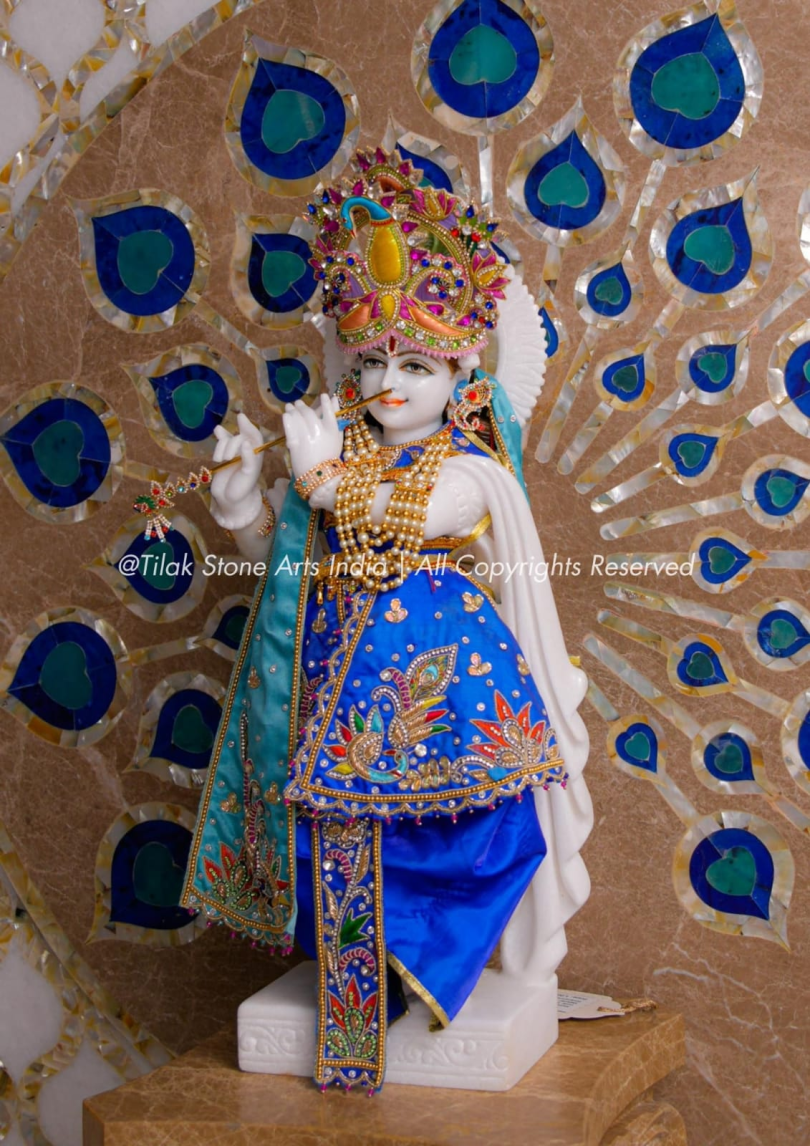

Open the cupboard in most Indian homes, and you will find the idols. There might be a small brass Ganesh, a Lakshmi from a wedding, a framed photo of a guru, and a Shaligram wrapped in cloth. These idols have accumulated over the years. Yet when people plan a mandir for the home, they often pick the mandir first and squeeze the idols in later.
That order is the main source of regret. A mandir for the home should grow out of the deities you already keep, not the other way round.
You already know who sits in your prayers each morning. The design, then, should begin with them, their number, their size, and the way you like to see them. Skip that, and even a beautiful mandir can feel slightly wrong the moment your idols go in.
Start With the Idols You Already Own
Take everything out and place it on a table. Look at what you actually pray to, not what a catalogue suggests you should own.
Some homes have one central deity and little else. Others hold a crowded family of brass figures, silver coins, and old photographs. The mandir has to hold all of it without looking cramped or half empty.
A designer who begins here, with your real idols in front of them, will plan a piece that fits your worship rather than someone else’s. When the mandir comes first, you quietly trim your worship to fit a shape someone else chose. Starting with the idols keeps that from happening.
Counting and Measuring Before You Buy a Mandir for the Home
Here is why this step matters more than choosing a design. Idols have height, width, and weight, and a mandir has shelves and niches that must take them.
A tall Krishna needs clearance above its crown. A heavy marble Durga needs a base that can bear the load. Brass and stone idols weigh more than they look, and a thin ledge becomes a real risk.
Measure each idol before you commit to anything. Write the numbers down before you shop, not after. Note which ones stand and which ones sit, since their heights differ once placed. This sounds dull, perhaps, but it saves you from the worst surprise: idols that simply do not fit the mandir you bought.
Where Each Deity Sits in a Home Mandir
Placement carries meaning, so think about it early. Most families seat the main deity in the centre, slightly raised above the rest. Smaller idols and photographs sit to the sides, within easy sight.
Have you ever noticed a mandir where one figure ends up squeezed at the edge, almost forgotten? That happens when placement comes as an afterthought. When the design plans each seat from the start, every deity has a settled place. Your eye then moves over them in the order you pray. Get the seating right, and the mandir feels ordered, the way a small temple does.
Matching a Marble Mandir to Idols of Different Sizes
Few families own idols of one neat size. You might have a large Ganesh beside a tiny Balaji and a framed picture. Photographs count too, as they need a flat, upright spot; the round idols do not.
A good mandir holds that mix comfortably rather than forcing every idol into the same slot. Tiered platforms let small idols rise to eye level, lifting them clear of the big ones. Deeper niches hold framed images upright without crowding the figures in front.
The marble itself, usually Vietnam White Marble, keeps a calm background that lets each idol, large or small, stand out clearly. You can also add a small idol later and still keep the balance, if the design left room for it. Owning idols you cannot place well is a common, quiet frustration, and a planned mandir removes it.
Light, Height and the Daily Darshan
Think about how you will see the idols every day. Faces matter most, so light should fall on them, not behind them. Where the light comes from matters too, because a single warm lamp on the faces changes the whole feel.
A niche set too deep can throw the deity into shadow. A mandir placed too high can leave you looking up at chins rather than eyes. An idol you strain to see each morning slowly stops drawing your attention, and the prayer suffers for it.
Giving Old Idols a Mandir That Fits
Some of these idols have been in the family for two generations. They sat in a steel almirah, on a kitchen shelf, in a corner that was never meant for them.
A mandir designed around them changes that. There is a quiet weight to giving an inherited idol a proper seat at last. Each idol gets a place that fits its size, light on its face, and a base strong enough to hold it for years.
Picture the first morning after you install the mandir. These are the same idols you have always kept, now seated the way they deserve. That feeling of the Gods finally at home in your house, is what designing around your idols gives you.