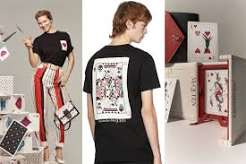

Fashion often borrows symbols from objects people already know. Flowers, stars, animals, letters, and numbers have all moved from daily life onto fabric. Game symbols followed the same path.
Playing cards offer a clear example. Hearts, diamonds, clubs, and spades use simple shapes with strong outlines. People can recognize them at a glance. That makes them useful for prints, embroidery, jewelry, bags, and small accessories.
Dice add another visual language. Their square form and neat rows of dots create patterns that work well on fabric. Chess pieces bring sharp silhouettes. Lucky numbers and other game-related symbols add another layer of meaning.
Designers do not need to reproduce a whole game to use these elements. A single heart on a jacket can act as a bold graphic mark. A repeated diamond pattern can become almost abstract when viewed from a distance.
This is how familiar objects become fashion motifs. Design removes the symbol from its original setting and gives it a new visual role.
On clothing, the card is no longer something held in a hand. It becomes a shape, pattern, reference, or cultural signal that people can wear.
Playing Card Suits Work Like A Ready-Made Design System
Playing cards give designers four symbols that already work well together. Hearts, diamonds, clubs, and spades share a simple scale and strong shape, yet each remains easy to identify.
That balance makes them useful in fashion.
A designer can repeat small suits across a shirt like polka dots. One large spade can become the main graphic on a jacket. Hearts can appear as embroidery, while diamonds can form a clean geometric print.
Digital culture has made these symbols even more familiar. A visitor moving from a fashion article to this website or another page about game-inspired design may see the same shapes used in very different settings. Their meaning changes with the context, but their visual strength remains.
Color adds another layer. Traditional red and black create sharp contrast. Designers can keep that familiar palette or replace it with softer tones, metallic finishes, or bright streetwear colors.
The symbols also scale well. They remain clear on a tiny earring or across the back of a coat.
Few visual systems offer this much flexibility with only four basic shapes. That simplicity helped card suits move beyond the table and into prints, accessories, and fashion graphics.
Dice Turn Chance Into A Geometric Pattern
Dice bring a different shape to fashion. Cards rely on flat symbols. Dice offer a cube, dots, and strong straight edges. These features make them easy to turn into prints and small decorative details.
The dots matter most. A designer can remove the cube and keep only the familiar arrangement of one to six points. Repeated across fabric, those dots can resemble a simple geometric pattern. The game reference becomes clear only when the dots appear in familiar groups.
Dice also carry ideas beyond their physical shape. They suggest chance, uncertainty, and surprise. Fashion often uses symbols because they communicate an idea before a viewer studies the garment closely.
Scale changes the effect. Tiny dice can form a playful shirt print. A large embroidered pair can become the main feature of a jacket. Small metal versions work as charms, earrings, or bag details.
Designers can also break the symbol apart. Dots, cubes, and sharp edges can appear separately while still hinting at the original object.
This flexibility explains why dice work well as fashion motifs. A common game object becomes a compact piece of graphic language.
Lucky Numbers Become Personal Style Symbols
Numbers appear everywhere in fashion. Sports shirts use them as identifiers. Streetwear prints them in large type. Jewelry turns them into small metal charms. Within game-inspired design, certain numbers also carry ideas of luck, chance, or personal meaning.
This makes numbers different from card suits or dice. Their meaning can change from one wearer to another.
A number may mark a birthday, a favorite athlete, or an important year. The same number may have a different cultural meaning in another country. Designers can use this flexibility without making the reference too literal.
Typography also changes the effect. Thick block numbers create a sportswear feel. Small engraved digits look more personal. Repeated numbers can form a pattern across fabric.
Numbers work especially well because they need little space. They fit on rings, necklaces, caps, shoes, bags, and clothing labels.
Their power comes from familiarity. Everyone understands numbers, but not everyone reads them in the same way.
That gives fashion room to experiment. A simple digit can act as decoration, identity, memory, or a symbol of luck, depending on how the designer places it.
Accessories Give Game Motifs A Smaller Canvas
A full card print can dominate a shirt or jacket. Accessories offer a quieter way to use the same symbols.
A heart pendant, spade earring, dice charm, or numbered ring can carry a game reference without defining the whole outfit. The symbol becomes a detail rather than the main theme.
This works because accessories use small surfaces well. Jewelry makers can turn a card suit into a clean metal shape. Bag designers can use dice as zipper pulls. A scarf can repeat tiny suits across its fabric. Even a watch face can borrow the neat geometry of cards and numbers.
Materials change how people read each motif. Polished metal can make a dice charm look sharp and modern. Enamel can add bright color. Leather can make a card symbol feel more restrained.
Accessories also let people mix symbols with ordinary clothes. A simple jacket and plain shirt can provide a neutral base for one bold piece.
Small scale does not weaken a familiar symbol. In many cases, it makes the reference more precise.
That makes accessories a natural home for game-inspired design. They turn recognizable symbols into compact details that can fit many styles.
Streetwear Gives Old Symbols A New Setting
Streetwear often takes familiar images and changes their meaning through scale, color, and placement. Game symbols fit this approach well because most people recognize them at once.
A small playing-card suit can become a large graphic across the back of a hoodie. Dice can appear beside lettering on a T-shirt. Numbers can cover sleeves, caps, or sneakers. The original symbols stay simple, but the new setting changes how they feel.
Streetwear also mixes references freely. A single outfit may combine sports numbers, cartoon graphics, music symbols, and card-inspired shapes. Designers do not need to follow the rules of the original game. They can stretch a diamond, repeat a heart, or turn a chess piece into a bold logo.
This freedom helps older symbols reach new audiences. What once belonged mainly to cards, board games, or entertainment spaces can become part of everyday clothing.
Streetwear treats symbols like building blocks. Designers take images people already understand, reshape them, and place them in a fresh context.
That process keeps game motifs useful even as fashion trends change.
Fashion Turns Familiar Objects Into New Visual Language
Game symbols last in fashion because they work even when their original setting disappears. A heart remains a clean shape. A diamond forms a sharp pattern. Dice become cubes and dots. Numbers can carry personal meaning.
This is part of a wider design process. Fashion often takes an everyday object and strips it down to its most recognizable features. Designers then change its size, material, color, or context.
A card suit printed across silk feels different from the same symbol on a streetwear hoodie. A metal dice charm looks different from a large dice graphic on a T-shirt. The source stays familiar, while the style changes.
That balance matters. People can recognize the reference without seeing a literal copy of the original object.
Game motifs also work across many fashion categories. They can appear on luxury pieces, casual clothes, jewelry, bags, or shoes. Each format gives the symbol a different role.
Fashion does not simply copy game imagery. It translates it. The strongest designs keep enough of the original symbol to make it familiar while giving it a new purpose through fabric, shape, and craft.
Familiar Symbols Keep Finding New Forms
Playing cards, dice, and lucky numbers entered fashion because they have qualities designers value. They are simple, recognizable, and easy to reshape.
Their original meaning does not need to control the design. A heart can become embroidery. A diamond can form a repeating print. Dice can become jewelry. Numbers can add a personal detail to a jacket or ring.
Fashion keeps these motifs fresh by changing their context. Materials, colors, scale, and placement can make the same symbol feel playful, elegant, bold, or restrained.
Accessories offer subtle references. Streetwear can enlarge the same images into strong graphics. Runway pieces can turn familiar shapes into detailed patterns or crafted decoration.
This process shows how fashion absorbs visual ideas from everyday culture. Designers notice shapes people already know, remove them from their usual setting, and give them another purpose.
Game symbols did not reach fashion because clothes needed to imitate games. They arrived because strong symbols travel well. Their clear forms give designers a visual vocabulary that can change with each new collection while remaining instantly familiar.